

What Is A CFP®?
Choose Financial Guidance Backed by Rigorous Standards
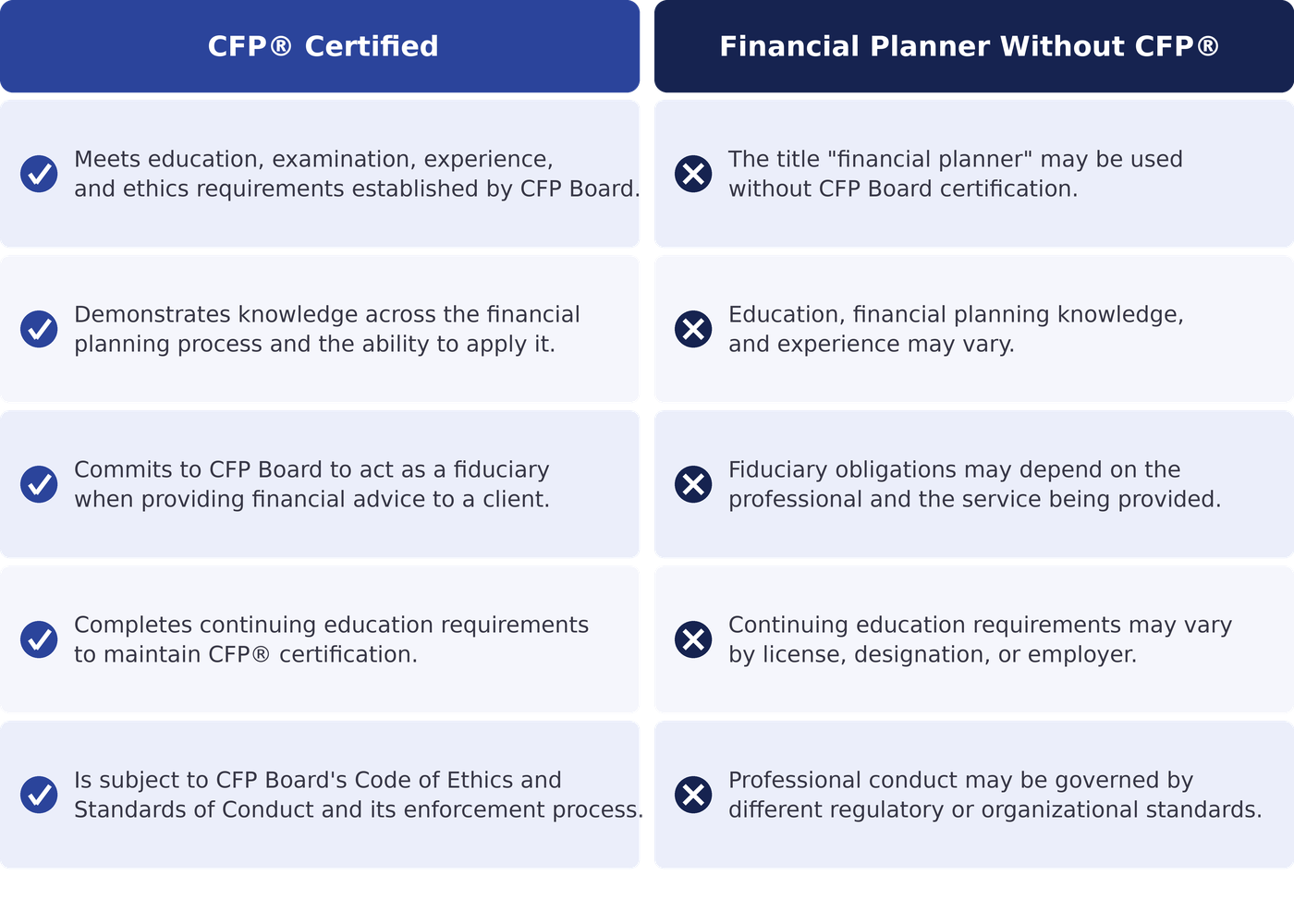
The title “financial planner” does not necessarily indicate a specific level of education, experience, or professional certification. CFP® professionals have completed a multi-step certification process established by CFP Board and must continue meeting its standards to maintain their certification.
Working with a CFP® professional means working with someone who has demonstrated financial planning knowledge, completed professional experience requirements, passed a comprehensive examination, and committed to ethical standards that include acting as a fiduciary when providing financial advice.
CFP DIFFERENCE
Your Interests Should Come First
A CFP® professional is an individual who has fulfilled CFP Board’s requirements for education, examination, experience, and ethics. These requirements are designed to assess both financial planning knowledge and the ability to apply it to real-life decisions.
CFP® professionals must also complete continuing education and follow CFP Board’s Code of Ethics and Standards of Conduct to maintain their certification.
As part of their certification, CFP® professionals commit to CFP Board to act as fiduciaries when providing financial advice to clients. This means placing the client’s interests first and addressing conflicts of interest according to CFP Board’s standards.
Financial Planning Rooted In What Matters To You
At TrueWealth, planning begins with understanding the people, values, responsibilities, and purposes behind your financial decisions. Learn more about the beliefs that shape our work and the commitments we bring to each client relationship.
WHAT SETS A CFP® PROFESSIONAL APART?
Look Beyond A Professional Title
WHY CHOOSE A CFP® PROFESSIONAL?
Education Across The Financial Planning Process
CFP® professionals complete coursework covering the knowledge needed to address interconnected financial decisions. Their education may span investments, retirement, taxes, insurance, estate planning, employee benefits, risk management, and the broader financial planning process. This preparation helps them evaluate how decisions in one area may affect the rest of your financial life.
Demonstrated Ability to Apply Financial Knowledge
Earning CFP® certification requires passing the CFP® Certification Examination. The exam evaluates whether candidates can apply financial planning knowledge to realistic client situations rather than simply recall individual facts. This focus on application supports advice that considers goals, available resources, competing priorities, and potential tradeoffs.
Real-World Financial Planning Experience
CFP® professionals must complete experience requirements established by CFP Board. This helps connect formal education with the practical work of gathering information, evaluating alternatives, developing recommendations, and helping clients address financial decisions. Experience requirements are one part of the broader certification process and do not stand alone.
A Commitment to Ethical Conduct
CFP® professionals agree to follow CFP Board’s Code of Ethics and Standards of Conduct. These standards address duties to clients, integrity, competence, conflicts of interest, confidentiality, and professional conduct. CFP Board may investigate and sanction CFP® professionals who violate its standards, including suspending or revoking their right to use the certification marks.
CFP® Professional Frequently Asked Questions
CFP® certification indicates that a financial professional has met CFP Board’s requirements for education, examination, experience, and ethics. CFP® professionals must also meet ongoing certification and continuing education requirements.
A CFP® professional must act as a fiduciary when providing financial advice to a client. This includes placing the client’s interests first, addressing conflicts of interest, and following the duties established by CFP Board’s Code of Ethics and Standards of Conduct.
“Financial advisor” is a broad professional title that does not, by itself, indicate CFP Board certification. A CFP® professional has completed CFP Board’s education, examination, experience, and ethics requirements and must continue meeting its professional standards.
A CFP® professional has completed required financial planning education, passed the CFP® Certification Examination, fulfilled professional experience requirements, and satisfied CFP Board’s ethics requirement. These are commonly referred to as the four E’s of CFP® certification.
You can verify a financial professional’s current CFP® certification through CFP Board’s public verification tool. Searching the individual’s name can help confirm whether the person is currently authorized to use the CFP® certification marks.
Who We Work With
We help clients navigate the financial decisions that come with greater responsibility and complexity.
Our Approach
We look beyond what you own and owe to coordinate the risks, structures, and relationships that shape your Second Balance Sheet.
Our Team
Meet the advisors and professionals who bring financial planning, business-owner perspective, and operational support to every client relationship.